Introduction
BPC-157 is one of the most discussed research peptides in today’s scientific community. It has gained attention for its potential roles in laboratories and preclinical studies.
⚠️ Note: Products sold as BPC-157 are strictly intended for research purposes only and not for human consumption. This article summarizes what studies are exploring — not medical advice.
What is BPC-157?
BPC-157 stands for Body Protection Compound-157, a synthetic peptide derived from a natural protein in gastric juices.
In research, BPC-157 has been studied in relation to:
- Tissue models (animal studies)
- Inflammatory pathways
- Angiogenesis (formation of blood vessels)
➡️ Findings remain limited to preclinical and laboratory settings. There are no approved medical uses.

Research Areas of BPC-157
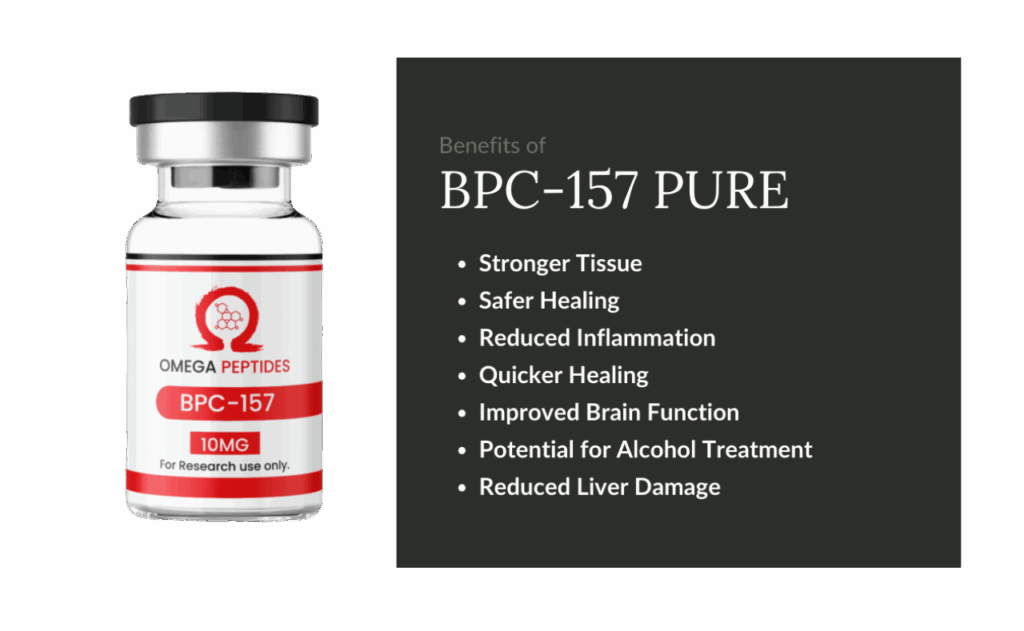
- Tissue and Wound Research – Investigated in animal models focusing on muscles, tendons, and ligaments.
- Inflammation and Recovery Pathways – Preclinical studies examine possible effects on inflammatory responses.
- Vascular Research – Experimental studies on angiogenesis (new blood vessel formation).
Limitations of Current Research
- Most evidence comes from animal or in vitro models.
- Human clinical trials are scarce or absent.
- No European or international authority has approved BPC-157 for therapeutic use.
Why Researchers Are Interested
- Early results suggest biological mechanisms worth studying further.
- BPC-157 belongs to a class of peptides useful for exploring recovery and regeneration.
Legal and Compliance Notes (Europe)
- Classified only as a research peptide.
- Cannot be marketed as a supplement or therapy.
- Laboratories must comply with EU import and labeling rules.
Frequently Asked Questions
Q: Is BPC-157 approved for human use?
No, it is for laboratory research only.
Q: Why is BPC-157 popular in research?
Because of its exploration in tissue and vascular studies.
Q: Can I purchase BPC-157 for personal use?
No, legitimate suppliers sell it exclusively for research purposes.
Conclusion
BPC-157 continues to be a widely discussed peptide in preclinical research. While animal and laboratory studies indicate interesting directions, it is not approved for human use.
⚠️ Disclaimer: Informational purposes only. Products are not for human consumption.